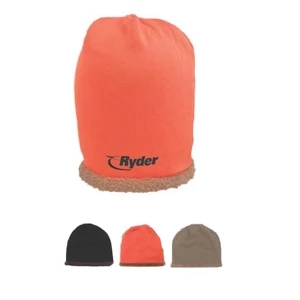
DYO Plush Hat
From $3.92
Displaying 1,867 products in total.
From $3.92
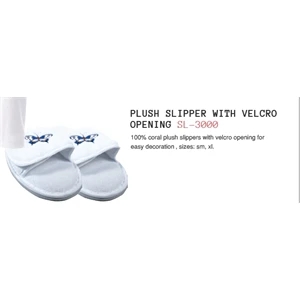
From $5.89
From $1.49
From $1.49
From $1.29
From $1.29
From $1.14
From $1.24
From $1.18
From $1.16
From $1.35
From $0.98
From $1.06
From $4.24
From $16.71
From $25.25
From $17.69
From $17.69
From $6.87
From $7.55
From $6.37
From $6.87
From $8.83
From $0.84
From $0.63
From $0.19
From $0.68
From $0.15
From $0.18
From $6.89
From $3.22
From $2.35
From $13.65
From $45.58
From $2.17
From $0.86
From $0.37
From $2.41
From $0.19
From $1.00
From $0.18
From $0.09
From $0.61
From $0.19
From $3.17
From $2.32
From $2.51
From $1.94
From $1.06
From $1.06
From $1.06
From $1.06
From $1.06
From $1.06
Organizations choose promotional lifestyle accessories when campaigns require practical everyday products that support consistent branding, reliable fulfillment, and long-term visibility across large distributions. Procurement teams managing employee programs, healthcare outreach, education initiatives, nonprofit campaigns, and event activations need products that eliminate common purchasing concerns such as inconsistent quality, branding variation, fulfillment delays, and difficult reorders.
This category supports confident purchasing decisions by combining functional usability with dependable customization standards, making it easier to maintain a professional and recognizable brand presence across every recipient group.
The strongest branded merchandise remains useful long after distribution. Promotional lifestyle accessories create repeated visibility because recipients integrate these branded lifestyle accessories into daily activities at home, while traveling, in workplaces, and throughout community settings. Unlike short-term giveaway items, custom lifestyle accessories continue delivering exposure through ongoing use. This extended visibility helps organizations reinforce recognition without requiring additional campaign investment.
Whether supporting employee engagement programs, customer appreciation initiatives, wellness campaigns, or conference distribution, practical products consistently outperform items that lack everyday relevance. Organizations frequently combine these products with best-selling promotional products and promotional leisure products to create broader distribution programs that maintain a unified brand experience across multiple audience segments.
Brand consistency remains a critical procurement requirement. Buyers expect the same logo placement, color accuracy, decoration quality, and product presentation regardless of order size or reorder frequency. Custom lifestyle accessories help reduce the risk of inconsistent branding by supporting standardized decoration methods and controlled production processes. This consistency becomes especially important when products are distributed across multiple departments, locations, campuses, healthcare facilities, or event sites. For organizations managing long-term purchasing programs, reliable customization protects brand credibility and simplifies approval processes for future orders.
Large-scale distribution requires products that perform reliably across different environments and recipient groups. Branded everyday products are selected because they suit a wide range of organizational objectives without creating logistical complexity. Corporate buyers use them for onboarding and employee appreciation initiatives. Educational institutions use these products for student engagement, orientation programs, alumni outreach, and campus events. Event planners and trade show organizers also rely on promotional lifestyle accessories because they provide practical value while supporting a professional event experience.
Healthcare organizations incorporate them into wellness and outreach campaigns, while nonprofits utilize them for fundraising, donor engagement, and community events. Many buyers also pair these items with healthcare promotional products and custom home products when building coordinated programs that extend beyond a single product category.
Successful merchandise programs depend on reorder confidence. Products that change specifications, decoration quality, or availability create unnecessary procurement challenges and increase administrative workload. Custom comfort items, custom living accessories, and other lifestyle-focused products support repeat purchasing through consistent production standards and dependable sourcing. This allows organizations to maintain continuity across recurring events, annual initiatives, employee programs, and ongoing outreach efforts. Procurement teams benefit from knowing future orders will match established expectations without requiring extensive review or product replacement.
When purchasing decisions are driven by reliability, usability, and long-term branding value, promotional lifestyle accessories remain one of the most dependable choices for large-scale brand distribution. They combine practical everyday function with consistent customization, scalable fulfillment, and reorder stability. For organizations seeking merchandise that supports professional presentation, efficient distribution, and sustained visibility, this category represents a sound procurement choice that continues delivering value well beyond the initial order.
Yes. These products are designed to support large-scale distribution programs across corporate, healthcare, education, nonprofit, and event environments.
Available methods vary by product and may include screen printing, digital printing, embroidery, engraving, and other product-specific decoration techniques.
Production standards are managed to maintain uniform logo placement, color accuracy, and decoration quality throughout the entire order run.
Yes. Their practical everyday use makes them highly suitable for trade shows, conferences, employee events, recruitment programs, and community outreach initiatives.
Yes. Many organizations use these products for recurring campaigns because reorder programs support consistent branding and product continuity.
Yes. Schools, universities, healthcare organizations, nonprofits, corporations, and government agencies regularly use these products for structured distribution programs.